
Mood-Based Playlists
Discover playlists that match or shift your current emotional state.
Auralog is a music-based emotional journaling app that turns listening into self-reflection.
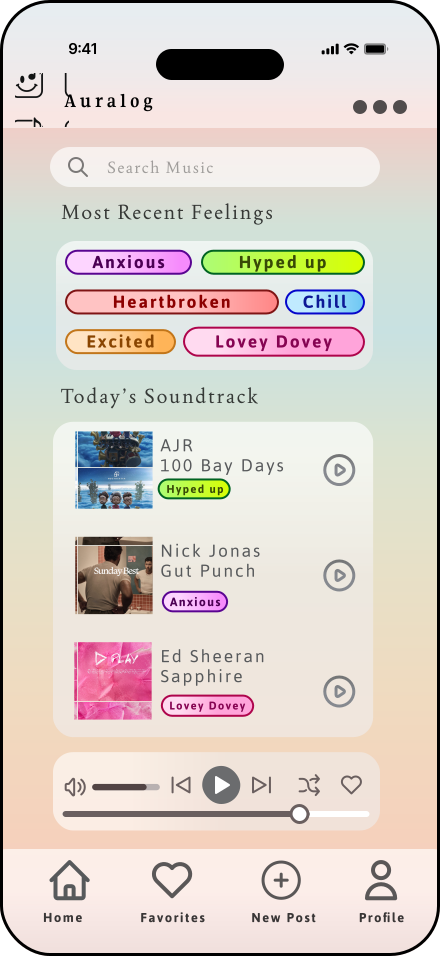
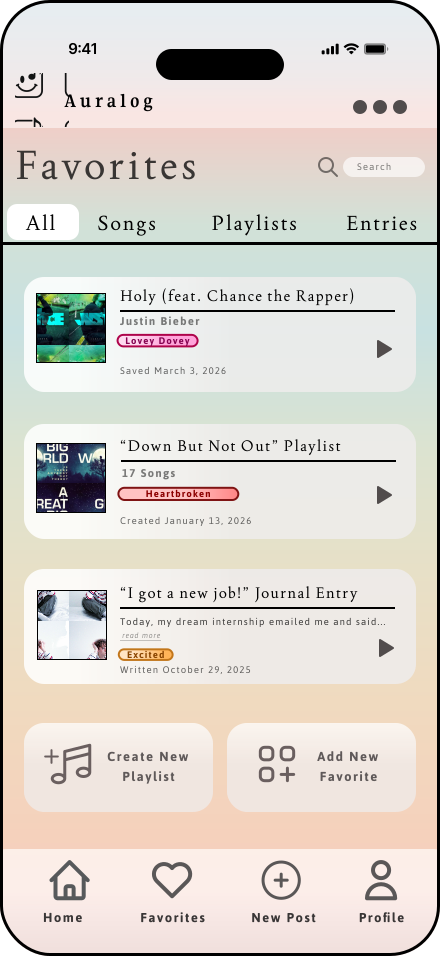
Music is one of the most emotional parts of our daily lives, but there isn’t a space where we can actually reflect on what it means to us.
Most platforms focus on what you listen to but not WHY you’re listening to it. We replay songs when we’re sad, excited, nostalgic, or overwhelmed, but those moments usually pass without being captured or truly understood within our subconscious.
A single song can hold a memory, a feeling, or an entire phase of someone’s life. Without a way to track those emotional connections, that meaning can disappear as quickly as it comes.
By combining mood tracking, journaling, and personalized playlists, Auralog helps users understand the emotional patterns behind their listening habits.
Instead of just playing music, users can engage with it and capture thoughts, revisit memories, and build a deeper connection to what they're not just hearing, but LISTENING to.
Discover playlists that match or shift your current emotional state.
Write or record reflections tied to specific songs and moments.
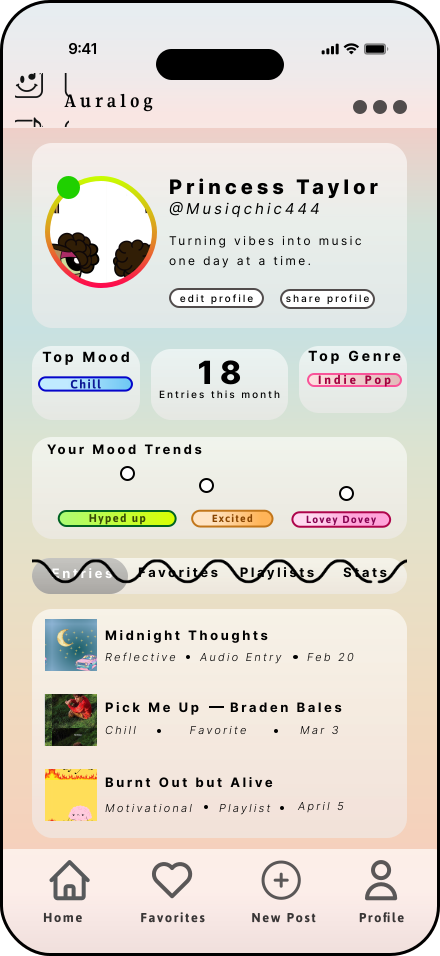
Track your feelings over time with simple, intuitive mood labels.
Save meaningful songs and entries to revisit later.
Explore moods and discover personalized soundtracks.
Revisit saved songs, playlists, and emotional moments.
View your reflections as a time capsule of music and emotion.
Capture thoughts, record audio, and connect your feelings to music in real time.
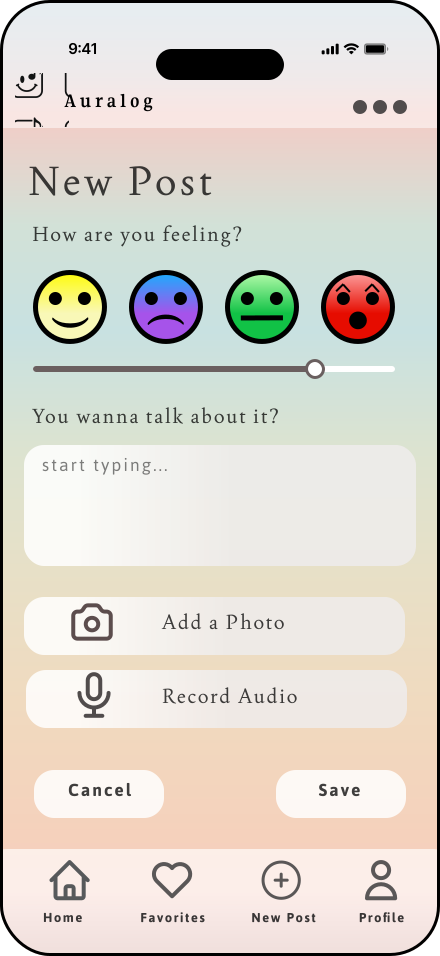
Auralog was designed to feel personal, calm, and emotionally intuitive rather than overwhelming or overly technical.
Emotion tags make feelings visible and easy to recognize at a glance. Card-based layouts create a sense of organized memory, allowing users to revisit past moments in a way that feels natural and familiar.
The overall experience prioritizes simplicity so users can focus on reflection without distraction.
This project helped me think beyond visual design and focus more on emotional user experience.
I learned how important it is to design with intention. Every feature should serve a purpose, not just exist for aesthetics.
If I were to continue developing Auralog, I would explore deeper personalization, stronger interaction design, and ways to create shared emotional experiences between users.